Posted on

Thinking about the future of coffee: A conversation between high school students and Mr. Araki, president of Ataka Trading Co., Ltd.

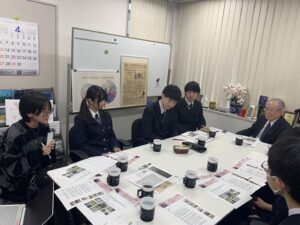
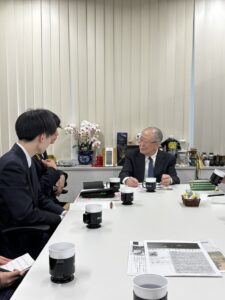
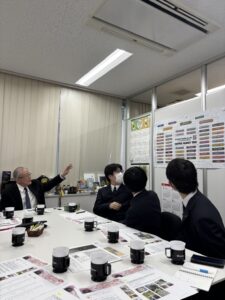
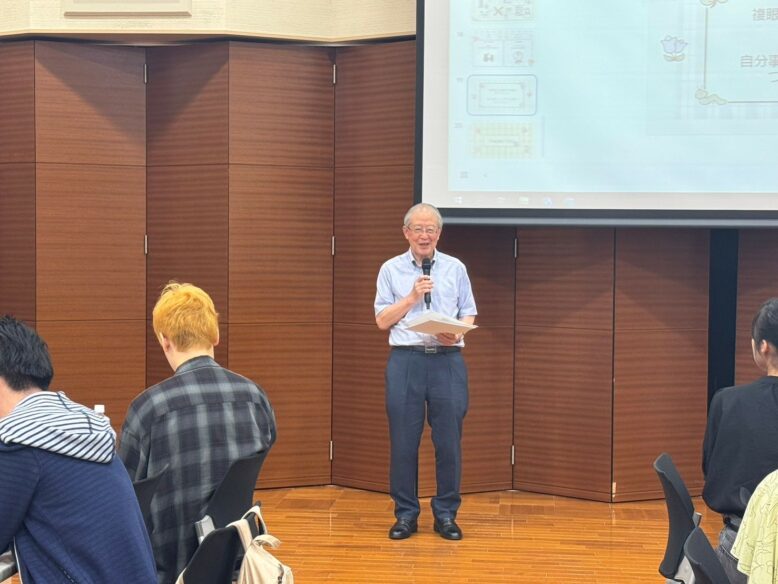
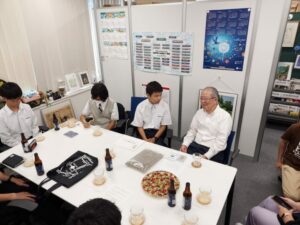
Recently, high school students interviewed Mr. Mamoru Araki, President of Ataka Trading Co., Ltd. The theme was the future of coffee, an essential part of our daily lives. In particular, they discussed various challenges and solutions, focusing on the “2050 coffee problem.” We will introduce the details of that interview below.

The Coffee Problem of 2050

The “2050 coffee problem” refers to the serious issue that, due to the effects of global warming, the production of delicious coffee could be halved by 2050.

The areas suitable for growing coffee beans are limited, and they are extremely sensitive to changes in temperature and rainfall. As global warming progresses, these areas are expected to shrink, making coffee cultivation more difficult.

Impact on production areas

The “2050 coffee problem” is expected to affect various coffee-producing regions, but Brazil is said to be the most affected. In other countries, manual harvesting is the norm, but it is highly susceptible to weather conditions and serious insect damage.

If these problems worsen, it could lead to soaring coffee prices and unemployment among people working on coffee plantations.

The background behind the surge in coffee prices

Currently, a cup of coffee is trading for 400 cents, and the following factors are thought to be contributing to this price surge.

The first issue is the imbalance between supply and demand. While global coffee consumption is increasing, coffee stocks in Brazil are decreasing.

Secondly, economic factors such as the impact of exchange rates (weak yen) and hoarding by some wealthy individuals are driving up prices.

For a deeper understanding: Coffee and the SDGs

The coffee trade is deeply intertwined with the SDGs (Sustainable Development Goals). The following points are particularly noteworthy:
Poverty: Promoting fair trade is essential to supporting the livelihoods of people working on coffee plantations.

Environmental issues: Measures to combat global warming and reduce pesticide use are required.

A message to high school students: Lessons from Malawian coffee

The interview also discussed ways to get middle and high school students interested in Malawian coffee.

Malawi is known for producing high-quality coffee beans, but this is not yet widely known.
To convey the appeal of Malawian coffee, it is important to highlight its origin and emphasize that it is produced in “Malawi.”

summary

This interview revealed that there are many challenges facing the future of coffee. However, at the same time, there are many things that each of us can do. We will actively work to solve these problems through the NPO Seibo.

For more details about our activities with students, please click here .

Click here for information on Warm Hearts Coffee Club’s activities with companies .

About Warm Hearts Coffee Club

This is a donation-based coffee brand by Seibo, a non-profit organization that provides school meal support in Malawi, Africa. In Japan, in addition to selling coffee, they partner with schools to deepen students’ learning from the perspectives of international aid, supply chain management, and marketing. They also have the support of many supporting companies, including Ataka Trading Co., Ltd., which is involved in coffee import business.

Please visit the NPO Seibo website here .

Posted on

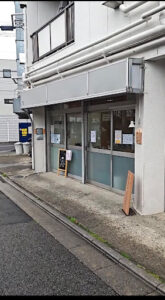
Cafe: Hare to Ke

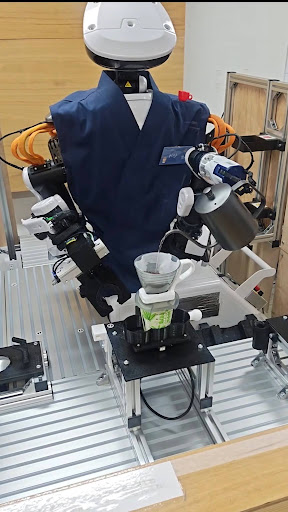
As I step through the doors of Hare to Ke, I am warmly greeted by Noguchi, the owner of the café, and her two robot employees, Dori and Dora.

The café has a cozy and welcoming atmosphere, where every detail feels thoughtfully placed. From the carefully selected products on display to the gentle harmony between tradition and technology, it is clear that Noguchi has a deep dedication not only to her surroundings and the environment but als

But I hope for a future where they can coexist with us and become part of our everyday routines.

 to the people who step into her space.

There is a quiet warmth here—one that invites you to slow down, take a seat, and simply be.

Noguchi:

“The name ‘Hare to Ke” comes from a concept expressed by the folklorist Kunio Yanagita.

“Hare” refers to the extraordinary, while “Ke” represents the everyday.

Robots are still not part of our daily lives—they are still something special.

At the same time, the concept also reflects the importance of daily life—especially eating.

The ranma (traditional transom) in the shop is another example.
It used to be a normal feature in Japanese homes, but today it feels almost extraordinary.


Through this space, I wanted to express how the boundary between the ordinary and extraordinary changes over time.

I also want to preserve and share Japanese cultural traditions.

For example, we sell dorayaki made with rice flour.
Normally, they are made with wheat flour, but since Japan has a strong rice culture, we use rice instead.

We grind the beans fresh so customers can fully enjoy the aroma.
Personally, I love drip coffee, and I feel it’s gentler on the body compared to espresso.

At home, I use a Hario V60.
In the café, we also use a dripper that allows us to brew multiple cups at once when it gets busy.

I’m originally from Kansai, so I wasn’t very familiar with Saitama.


When I was looking for a place to open the café, friends recommended Urawa.
It’s known as an educational district, with a strong focus on children and learning.

It has both urban convenience and access to nature, which creates a really nice balance.


That idea of “balance” also connects to the concept of this café.

There are many children in this area, and there are kindergartens nearby, so a lot of kids visit the café.

It makes me really happy to see so many children here.

My connection to Malawi started through students from a nearby school.

They first came as regular customers, but they had a strong passion for promoting fair trade.
That eventually led to our collaboration.

It felt like a meaningful connection, and I was really happy about it.

The café is not the final goal—there is more I want to do beyond it.

In Japan, many farmers are aging, and there is a shortage of successors.
Since eating is essential to life, food is incredibly important.

In the future, I would like to grow vegetables in an environmentally friendly way, without pesticides,
and bring back traditional farming and produce.”

As I listen and chat with Noguchi, I take a sip of the Malawian coffee that Dori has carefully brewed for me.

The bright yet gentle flavors of the beans, shaped by their unique terroir, blend seamlessly with the warm and calming atmosphere of the café. In that moment, I feel both relaxed and quietly satisfied.

Hare to Ke is a truly unique concept—one that bridges the everyday and the extraordinary.
If you ever find yourself nearby, I would highly recommend stopping by to experience it for yourself and to meet Noguchi and her two charming and dedicated robot companions, Dori and Dora.


Do you also want to taste the warmth of Malawi in a single cup—while helping provide school meals for children?

https://www.charity-coffee.jp/en/?srsltid=AfmBOorsrnjjFT30lkrfOpvaUWycGcL2FZbh_nWwhTCrQnP1XBYQJ8DI

Posted on

Regarding the transfer to a business-type NPO and the revision of product prices

Thank you very much to everyone who has made donations, provided support, and been involved in our activities.

Last year, in 2025, we were able to provide daily school lunches to approximately 20,000 children, and it was a year in which many families and entire communities were revitalized. We
are also very honored to have received support from many people in Japan, mainly through our business of Malawian coffee and tea.
In the future, we will add new products using chocolate and Chitenge cloth, and deliver the richness of Malawi to many people through our products, thereby contributing to the provision of school lunches in the region!

Click here  for the activity report for fiscal year 2025!

・Announcements for 2026
and two things we would like to share with you as we continue our activities.

1. Transfer to a Business-Oriented NPO:
Until now, our organization has been selling products as a general incorporated association, “Seibo,” and donating the profits to the NPO “Seibo,” which has the same mission, and then sending the donated amount to Malawi.
However, for the following reasons, we will be consolidating this structure into the operations of the NPO Seibo.

– Avoid complicating the organizational structure and simplify explanations to donors, corporations, and educational institutions.
– Simplify the donation process and create a more trustworthy structure.
– Increase the number of people who are interested in “donations only” as we aim to become a certified NPO in the future.

Until now, our organization has operated as a taxable general incorporated association to maintain the traditional form of an NPO, where 100% of donations (minus transfer fees) are sent to Malawi (returning them to our mission).
However, we have decided that by adopting a business model for our NPO, we can further expand our image as an NPO and gain the understanding of more people, which will lead to sustainable NPO operations and the continuation of realistic support for Malawi. We
would appreciate your understanding. And we ask for your continued support for school meal assistance in Malawi.

2. Price Revision for Green Coffee Beans and Products
Next, we would like to address our donation-based coffee site, Warm Hearts Coffee Club.
Due to the decrease in the quantity of green coffee beans and the increase in unit prices caused by climate change, we will be revising our prices starting with orders placed on April 1st.
Regarding green beans, we have consulted with our trading company to find the best solution and will be providing beans from Kajibajiba, Burundi.
(Kajibajibah is the name of the hill where the washing station is located.)
If the supply of beans from Malawi becomes unstable, there is a high possibility that the change will occur within this year, so we are informing you of this.

Product Name: Kajibajiba
Country of Origin: Burundi
Processing Method: Fully Washed

*For detailed pricing information,  please click here  .

Following last year’s changes to our operational structure, we sincerely apologize for the inconvenience this will cause you regarding changes to your payment account and other matters.
However, we have decided to transfer operations in order to ensure stable continuity in the future.
We appreciate your understanding.
Price List 26_compressed

Posted on

Warm Hearts Coffee at Yonaoshi Conference

Our coffee is going places! Aside from selling coffee online,
we are also trying to be as active offline. We join many different events around Tokyo to promote our delicious Malawian Coffee.
Last week on the 23rd of November, we joined the Yonaoshi Conference at Toyo University.

This 2-days conference offers many fun and interesting activities for activists in Tokyo to share and to connect.
Those activities includes; keynote speakers, panels, leadership booths, round-table discussions,
workshops and entertainment in Japanese as well as English.

This year’s theme of the conference itself focuses on threat to human civilisation brought on by the worsening ecological and climate crisis.
The conference conclude that a change in system is much needed for our current situation.
We need to remake the world together! Then why don’t you start by supporting our coffee?

Do you know that we donate part of our online proceeds to Seibo Japan, to support school feeding in Malawi?
Yes! Every 100g you bought from us, equals to 70 hungry children getting fed!
So when it comes to the decision on who can provide your daily fresh coffee,
choosing us won’t ever disappoint you and the children.

Posted on

Interview with Mr. Araki, president of Ataka Trading Co., Ltd

Q: Why did Ataka Trading choose Malawi coffee?

A: Ataka Trading chose Malawi coffee as part of its business strategy. While coffee from Ethiopia, Brazil, Colombia, Indonesia, and other Central American countries has long been recognized and widely available in the market, Ataka Trading turned its attention to Africa.

Despite being relatively unknown in the coffee industry, Africa is home to many emerging coffee-producing countries that are working to develop their economies through coffee cultivation. Malawi, in particular, was one of the countries that had not yet been explored by major trading companies.

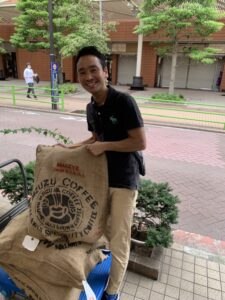
Ataka has developed a business strategy to engage with countries that larger trading companies have overlooked, which led to the decision to handle Malawi coffee. Below is a picture of the representative of Seibo, a non-profit organization, alongside the raw beans received from Ataka Trading.

Q: How do you communicate with the local community?

A: Fernandez, who previously served as the General Manager of the Coffee Industry Board (CIB) in Jamaica, acts as an agent for Ataka Trading in negotiations with the local government. The core of Ataka’s coffee business is Blue Mountain coffee from Jamaica. After leaving his position at the CIB, Fernandez became an agent for Ataka Trading to establish a new “Specialty Coffee” business. Specialty coffee refers to high-quality coffee that consumers value and are satisfied with, which is strictly controlled from production to consumption. Although the price is higher than that of regular coffee, it is carefully selected to be sustainable and includes mechanisms to trace where and who produced the ingredients.

The concept behind this coffee movement is “quality rather than quantity” in the American coffee market. The market was saturated with low-quality coffee from large farms, creating a vicious cycle where delicious coffee disappeared globally. Consequently, even if farmers produced high-quality coffee, it was not reflected in the prices they received. This led to the birth of specialty coffee, founded on the principle of “paying fair wages to those who produce high-quality coffee beans.”

Specialty coffee quickly gained popularity not only in America but also in Europe and Japan, leading to the establishment of the European Specialty Coffee Association and the Japan Specialty Coffee Association. As the coffee qualification system developed, educational initiatives were introduced, and specialty coffee gained global recognition. Additionally, this period saw an increase in home roasting.

Note: The Coffee Industry Board (CIB) is an institution established by the Jamaican government to revive and expand Jamaica’s coffee production. It holds all powers related to the coffee industry, and Jamaica’s Blue Mountain coffee is strictly regulated by the CIB.


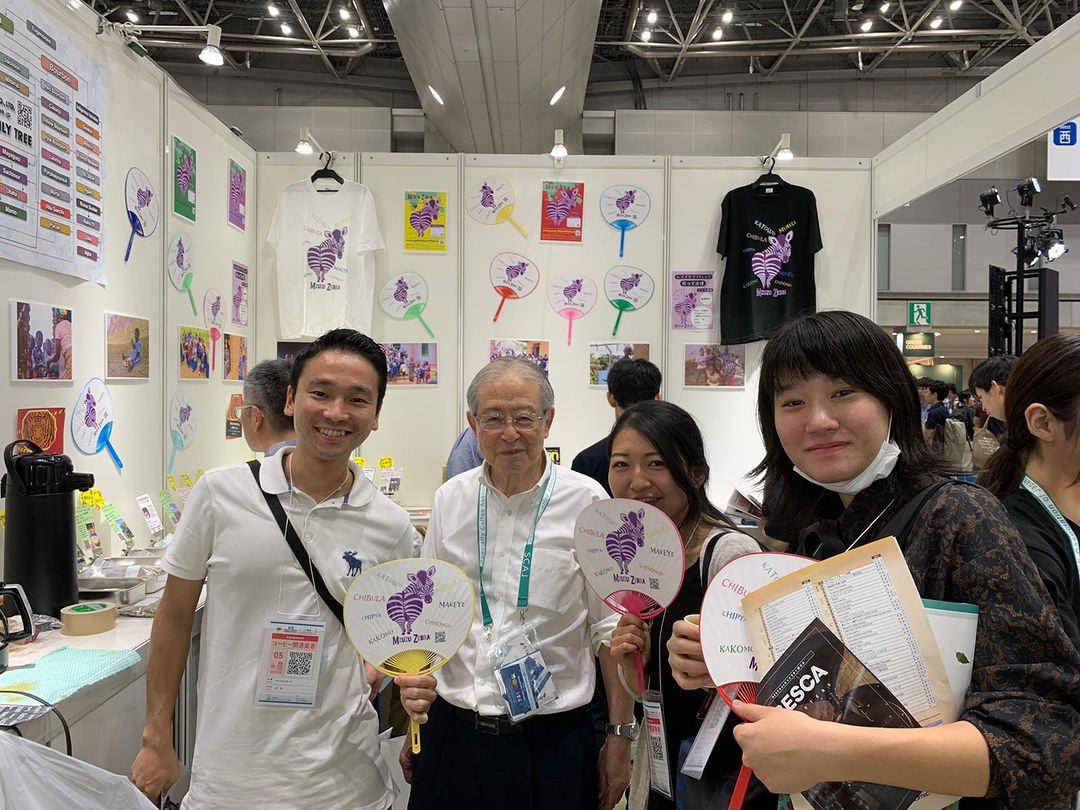
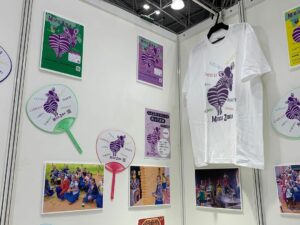
(The photo below shows the logo of Ataka Trading Malawi bean brand, MZUZU ZEBRA, along with its products.)

Q: Are there any characteristics unique to Malawi coffee?

A: While coffee is widely loved, it can be challenging to distinguish Malawi coffee from other types based solely on taste. The flavor of coffee is influenced not only by the type of beans but also by how they are roasted, brewed, and the brewing temperature, making it a delicate beverage. Although it may be difficult to characterize coffee by taste alone, it can be defined by the “image” it evokes for consumers.

For instance, what comes to mind when you hear “Blue Mountain”? Most people likely envision a rich and delicious coffee. It’s essential for consumers not just to taste the coffee but to form a mental image of it over time.
Ataka Trading Co., Ltd. handles a raw bean known as “Sumatra Tiger,” which has received high praise for its branding strategy that creates a compelling image for consumers. About ten years ago, Ataka began marketing coffee from the Indonesian island of Sumatra under the name “Sumatra Tiger,” transitioning from its previous name, “Mandelin.” Typically, raw coffee beans are traded under the names of their producing countries, such as Brazil or Colombia. However, Ataka chose to borrow the name of the Sumatra tiger, complete with a cute character logo on the packaging. As a result, consumers who initially ordered “Mandelin” gradually shifted to ordering “Sumatra Tiger.” The well-known Sumatra Tiger has even been commercialized by Lawson and remains popular today.

Q: How does Ataka Trading deal with fair trade?

A: Fair trade refers to a trading system aimed at stabilizing the lives of producers in developing countries by ensuring they receive reasonable prices for their goods. The pricing of fair trade products is influenced by the market rates in New York and London, which can be subject to fluctuations. This makes fair trade coffee a high-risk product for trading companies like Ataka.
Despite these risks, Ataka Trading prioritizes the principles of fair trade by consistently purchasing goods at equitable prices. A core value of Ataka’s approach to fair trade is the concept of the “three-way street,” which means that everyone involved—producers, sellers, and buyers—should be satisfied with the transaction. This philosophy is rooted in the management principles passed down from the time of Omi merchants. Ataka believes it is essential not only to pursue one’s interests but also to consider the perspectives of others and to foster a spirit of goodwill towards the community. Ataka Trading aims to build trust not only in the fair trade sector but across all its business dealings, ensuring a balanced relationship with the people on the farms.
How did you find this information? Have you gained insights into Mr. Araki thoughts on coffee, his business strategy, and his cooperation with non-profits? For more details, please check out the video featuring student volunteers covering Ataka Trading here.

Posted on

What kind of coffee is specialty coffee?

Our Malawi coffee is classified as “Specialty Coffee.” We consulted with Ataka Trading Co., Ltd., our coffee supplier, to understand how this classification is determined and how the importer plans to brand and market such coffee.

Learn more about the lecture that invited Morimori Araki, president of Ataka International Trade Co., Ltd. here.


What is Specialty Coffee?

The definition of specialty coffee involves meeting a variety of specific requirements and conditions. When these are fulfilled, consumers (coffee drinkers) are likely to find the coffee highly satisfying and delicious, qualifying it as specialty coffee. There are also objective criteria for its evaluation. The most important factor is ensuring that every step of the process, from raw beans to the final cup, is carried out correctly.

This process involves several key players: farmers, importers (wholesalers), roasters (manufacturers), retailers (both online and in stores), and consumers. The factors that contribute to a delicious cup of coffee for consumers are typically:

  • 60% from the quality of the raw coffee beans.
  • 10% from the importer’s distribution process.
  • 30% from the roasting and production methods used by roasters.These elements are essential to producing a high-quality cup of coffee.


Initiatives of Ataka Trading Co., Ltd.

Mr. Araki, president of Ataka Trading, mentioned that, when purchasing raw beans, they ensure proper cultivation management, harvesting, processing, screening, and quality control. The aim is to select beans with minimal contamination and defects. They also request samples and conduct thorough wrapping procedures.

The key points they evaluate are:

    • Taste: It should not have any unpleasant flavors.
    • Refining methods: The flavor should reflect the differences in processing methods.
    • Price: The purchase price should be deemed appropriate.

Ultimately, the overall market trend helps determine whether the price is suitable for customers, ensuring the coffee remains appealing for repeat purchases.


Challenges for the future specialty coffee market

In the distribution process from farmers to roasters (manufacturers), the coffee is indeed traded as specialty coffee.

The biggest challenge lies with retail stores (both online and physical). This involves the process of selling to consumers. While retailers promote their offerings as specialty coffee, many times, this advertising has not translated into increased sales, and the market share of specialty coffee has remained sluggish. Ultimately, coffee is a matter of personal preference, and the perceived quality is determined by the consumer.

Generally, coffee is appreciated for its balance of aroma, acidity, bitterness, and richness. Ideally, it should leave the drinker wanting a second cup. Despite not always being marketed successfully as specialty coffee, efforts continue to explore how to effectively appeal to consumers and expand the market for high-quality specialty coffee.


Branding as Warm Hearts Coffee

In the meantime, the role of our Warm Hearts Coffee Club is to enhance the specialty coffee market by adding social value over time. Warm Hearts Coffee Club is currently collaborating with Ataka Trading and a group of young students who will play a key role in shaping the future of the coffee industry, as well as exploring the relationship between consumer culture and the planet.

Learn more about the activities with students from here.

As our sales support school lunches in Malawi, we hope to expand this initiative from Malawi to other parts of Africa, where the population is growing. This expansion aims to enhance the benefits of delicious coffee and create a brand that is socially responsible and widely accepted.

Learn more about the Warm Hearts Coffee Club and the company’s activities here.


About Warm Hearts Coffee Club

A donation-type coffee brand by Seibo, a non-profit organization that supports school lunches in Malawi, Africa.

In Japan, we are not only selling coffee, but also cooperating with schools to deepen our learning with students from the perspective of international support, supply chain, and marketing. It has also received approval from many supporting companies, including Ataka Trading Co., Ltd., which is engaged in the coffee import business.

Posted on

Malawian Coffee Selected for CSR Activities

In recent years, as organizations have been increasing their involvement in SDGs, there have been more opportunities for CSR to be looked into and explored. CSR stands for Corporate Social Responsibility. Nailing down a concrete definition of CSR is difficult, but it is generally understood to be a practice in which social and/or environmental concerns are integrated into business practices and interactions with shareholders. In this article, we will introduce one example of CSR activities through examining the Warm Hearts Coffee Club.

1.Blue Yonder:

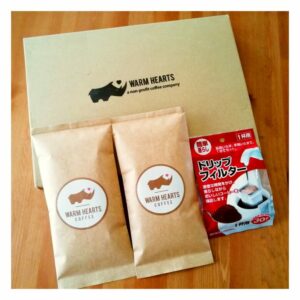
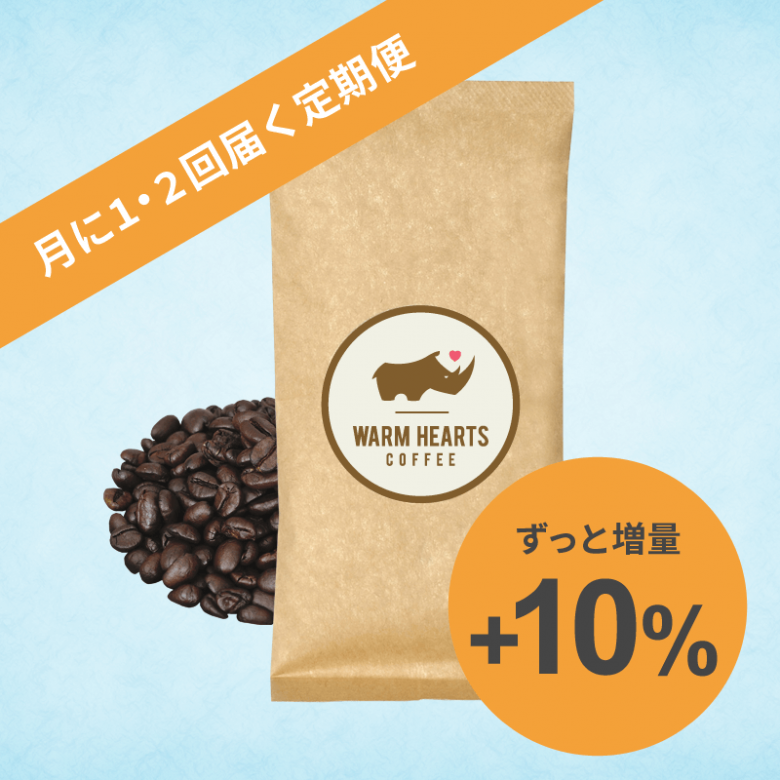
Blue Yonder Japan Co plans to give ethical gifts to employees and clients as part of their CSR activities. They have applied for the following Malawian coffee and 30 filters set. We were told two reasons why Malawian coffee from Warm Hearts Coffee Club was selected.

-Profit will be donated to charity.
-It is better to make employees happy with ethical rather than unethical gifts.

The decisive factor in choosing Warm Hearts coffee is that any purchase would be beneficial to global society while also pleasing employees.

By using our Malawian coffee as a gift, we received a donation of about 14,200 school meals for Malawian children. By using Warm Hearts Coffee cLub’s donated coffee for this kind of in-house CSR activity, companies and employees can increase their knowledge and awareness of Malawi and charitable activities.

2.Value Drivers Co:

On Tableloop (a site where which sells products to eliminate food waste) our coffee has been introduced and sold as an ethical product which leads to charitable donations.

3.Oedo Administrative Office:

We have created a Malawian coffee drip pack to be something you can drink while taking a break at work. A small change in which coffee you drink can provide a big change in the world. Thank you very much for joining us in our mission to improve consumptive behavior and make the world a better place!

4.Nakaya Kogei Co:

We send our coffee to our business partners, who use our coffee for mid-year and year-end gifts. People involved in the same job share the same mission, and when drinking the same coffee, can spread the message and have a big effect. As always, thank you so much.

5.Sync Logistics Co:

We received many orders for coffee as part of an internal SDG initiative. Taking this initiative as an opportunity to spread our message and mission throughout the company, it provided a valuable chance for employees to learn about Malawi.

6.Showa Shokai Co:
It was used in my company as a midsummer gift. Due to the transparency in support for Malawi, the company president sympathized with our activities and purchased the coffee for distribution. Thank you very much.

7.Ethical Café:

Using ethical consumption as a keyword, they use the Facebook community to deliver products and concepts to many people. Malawian coffee has been featured before.

8.Hokkaido Coca-Cola:

We received support from Hokkaido Coca-Cola Bottling Co by providing coffee and their own upcycled products. During the crowdfunding, many people learned about coffee and Malawi- it was also a chance to get to know everyone! Thank you very much.

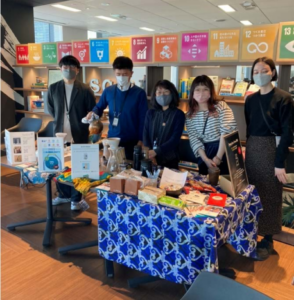
9.Scope Co:
In December 2021, the staff brewed coffee at the event and explained about the product- the background, how to drink it, flavor characteristics, etc. Many people enjoyed it, and we received a good response from the internal company event.

10.TKM LLC:

TKM Godo Kaisha used our drip packs as end-of-year gifts distributed to employees and business partners. Thank you for using and supporting us!

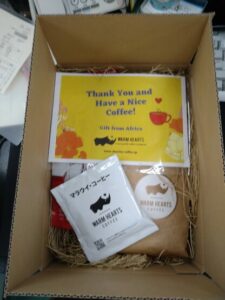
11.Issui Manufacturing Co:

Issui Seisakusho Co used our coffee as a gift for customers in the form shown in the picture below. I had a bag of snacks put in, so I was able to take advantage of the coffee gift. Thank you for using us.

12.Yokohama Kiko Co:

Yokohama Kikou Co contacted us as a result of considering SDGs internally and ended up using our coffee as gifts for business partners. Many people were informed about the SDG initiatives that will lead to the eradication of poverty, and it was also a good opportunity to call for support for school meals in Malawi.
As a result of this collaboration, about 4,500 school meals were donated. Thank you for this precious opportunity.

13.Infocom Co:

Infocom Co has used a Malawian coffee drip pack with an originally designed label. Infocom’s Lookat service visualizes and disseminates information about SDG initiatives and is working on transformation of corporate culture and organizational frameworks. We are very honored our coffee organization was chosen to participate in this company’s efforts.

14.Yamaha Music instructor Union:
Our coffee was used as a mid-year gift for lawyers and others who whom we are indebted. The amount of support was equal to about 400 school meals for children in Malawi. Thank you for using our service!

15.Shimada Green Center:

Shizuoka’s Shimada Green Center sold our coffee at their SGC Charity Market. At the Charity Market, a dog adoption event was run by NPO ‘Project to Protect That Little Life’. The adoption meeting is a place where both the procurer and potential adopter of the dog go through a careful examination, making sure the dog will have a wonderful life full of love, and making sure that the adopter is a good fit for the dog.

It can be said that the Charity Market is a place full of charitable spirit. This time, our charity coffee was sold at the adoption event. Thank you for allowing us to sell coffee!

Would you like to use African Fair Trade coffee gifts, profits of which will be donated to the coffee’s country of origin, as part of your company’s CSR activities?

Warm Hearts Coffee Club’s coffee is a drink that benefits global society just by being drunk. Grown without pesticides in the highlands of Malawi, this environmentally friendly coffee is sold with profits being used to fund school meals for children in Malawi. We can provide coffee gift sets according to your specifications, such as for companies that emphasize CSR activities. We have already received orders for in-house gifts from companies in Japan, such as those listed above. We use only AA-ranked specialty coffee beans and have received praise for their high quality and taste.

Posted on

Stay At Home With Us

Stuck at home? What better way to spend your days inside accompanied by a warm cup of coffee! Our coffee will not only warm up your day, but it will warm up your heart! All online proceeds from the coffee will be donated to Seibo Japan. A Japan based NGO who pledged to feed hungry children in Malawi. So wait no longer and order our coffee 🙂

Posted on

Bought it! How do I make the coffee?

Making coffee is pretty easy, especially if you order ground coffee! We personally do pour covers, so you’ll need a pour-over coffee pot.

First, make sure to heat your water. Then, line the funnel with the correct size coffee filter. After that, put in however many tablespoon scoops of ground coffee into the funnel. In general, use 3 tablespoons of coffee for one cup. The last step is to pour hot water into the funnel slowly until it finishes dripping. Make sure to only pour enough water to cover the beans before repouring once it has finished filtering through the funnel. Also please take care to leave no dry clumps of coffee behind. The whole process will take around two to four minutes, depending on which kind of roasted coffee you have. After the process has finished, your done and free to do anything with the drink!